Connect operations with useful intelligence
Manufacturing AI & factory integration
Scope software, hardware, and AI integration around factory information flows, production decisions, and the operational constraints of the people running the facility.
Book an AI strategy call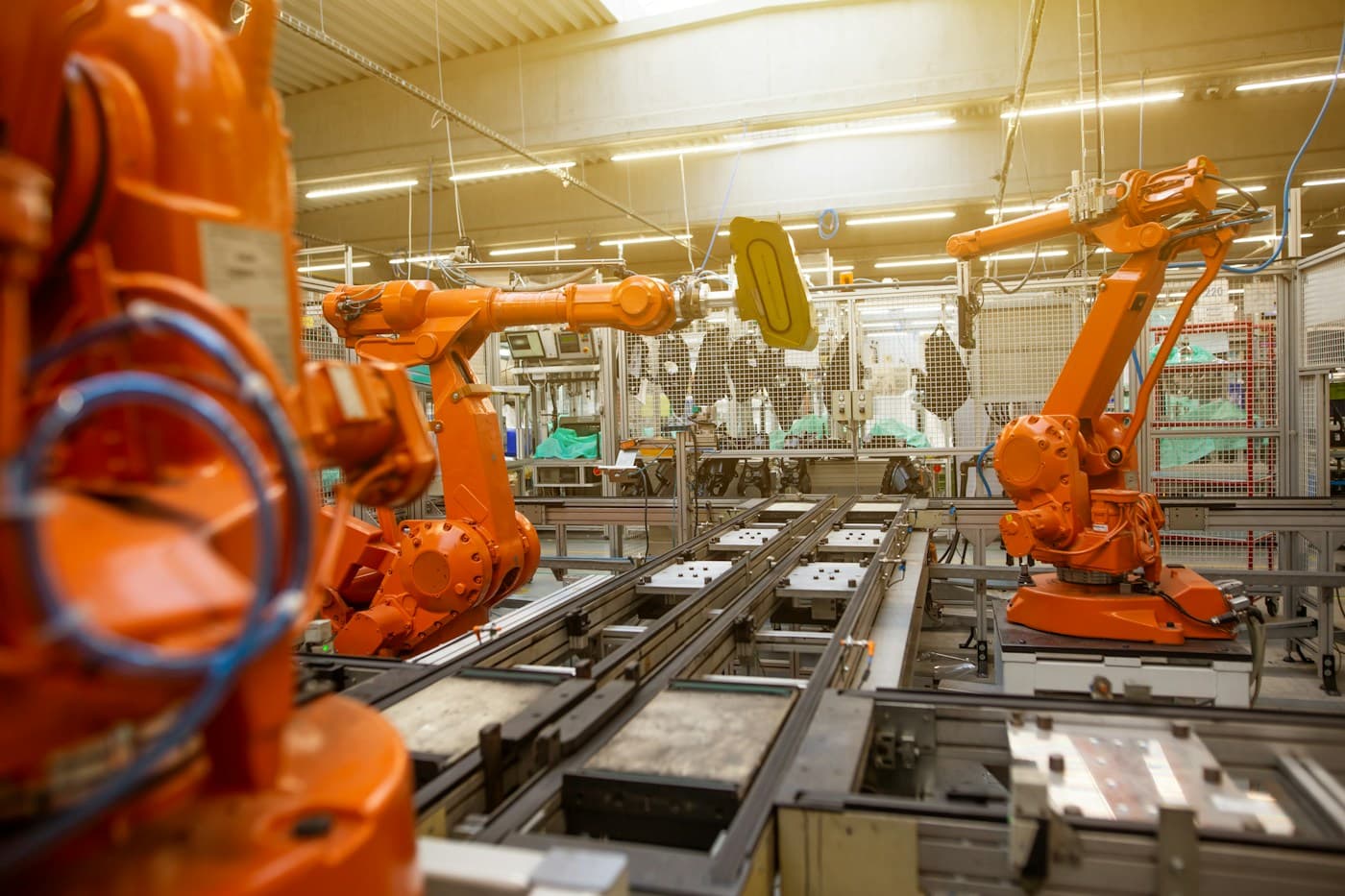
Start with the work.
Manufacturing work connects physical equipment, production systems, and people with different responsibilities. Agentix helps assess where software integration, machine learning, or an AI-assisted workflow can improve visibility and decision preparation. Drake Wolfe brings experience in construction, commercial construction, factory automation, and prefabrication solutions to the discovery conversation.
Factory information can be distributed across equipment records, maintenance notes, production systems, and spreadsheets. A useful project must establish what those records mean and how they can be accessed safely. It must also respect uptime, change control, and the separation between business software and operational technology. A promising analytical idea is only actionable when the underlying signals and ownership are understood.
What we deliver
A systems and data-boundary assessment
Map the relevant equipment interfaces, historians, PLC data, MES, ERP, and maintenance systems with the facility's responsible specialists. Identify authorized read paths, network boundaries, data quality, and vendor constraints before proposing a connection to any operational environment.
A scoped integration or analytical pilot
Define a bounded use case such as production reporting, document assistance, or a feasibility assessment for anomaly detection. Document required data, representative conditions, evaluation criteria, and the plant-side support needed to establish whether the idea can work.
An operational adoption plan
Specify the people who review outputs, handle exceptions, and approve changes. Keep machine-safety functions and deterministic controls in their established systems. Any proposed write path or equipment change requires its own specialist review and explicit authorization.
Where this can make a difference
Illustrative applications. Scope and feasibility depend on your systems and requirements.
Production and shift information
Combine approved production records and operator notes into a reviewable handover. Preserve timestamps, source references, and unresolved issues so a summary supports the next shift's judgment without claiming to know more than the available records.
Maintenance knowledge assistance
Help staff find relevant procedures and historical notes from approved material. Surface the exact source and equipment context, and route uncertainty to qualified personnel rather than generating an unsupported maintenance instruction.
Machine-learning feasibility
Assess whether available historical signals, labels, and operating conditions support a useful quality or anomaly-detection project. Establish a baseline and a validation method before promising predictive performance or installing a model into an operational workflow.
How we approach it
Discover with operations and controls owners
Understand the production objective, equipment constraints, existing integrations, and facility change procedures. Identify the specialists whose approval and participation are required for the proposed scope.
Validate through a bounded data path
Use an approved export or constrained integration to test data meaning and analytical value. Review missing signals, unusual operating states, and the consequences of an incorrect recommendation.
Review before operational adoption
Demonstrate the pilot against agreed evidence and confirm its support requirements. Stage any further integration through the facility's change process with documented ownership, recovery, and acceptance checks.
Questions worth asking
Will an LLM control machinery or safety functions?
The proposed services keep machine-safety controls and deterministic equipment logic in their established systems. AI may support information retrieval, analysis, or decision preparation within an approved scope. It does not replace the facility's qualified controls engineering, hazard review, or safety responsibilities.
Can you integrate any PLC, MES, or ERP?
Compatibility must be verified for the actual installation. We assess vendor interfaces, authorized protocols, data access, licensing, and the availability of plant or vendor specialists. OPC UA may be relevant where supported; its presence alone does not establish an approved or complete integration.
Can we start without changing production equipment?
Often the sensible first step is discovery using approved documentation and existing exports. Whether that is sufficient depends on the question being tested. We scope the pilot around available evidence and plant constraints, and identify additional access only when it is necessary.
Start with a conversation
What could your business
do with more capacity?
Bring the work that slows your team down. We’ll help you identify a useful next step, from your first dot to a connected operating system.
A focused conversation about your business.
No technical brief required.